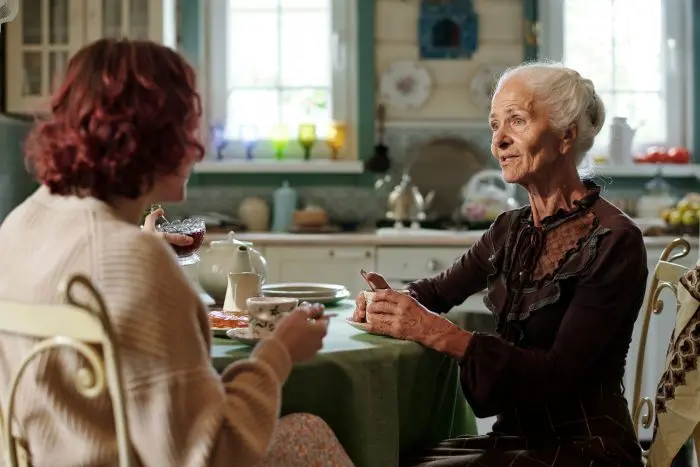
If you have started looking into care options for a parent, you have probably seen a wide range of communities. Some are large campuses with apartments, dining rooms, and many residents. For some families, that setting feels like a natural fit. Others are looking for an environment that feels smaller, quieter, or more familiar to the person they love.
There is a middle option between staying at home and moving into a large community, and in Kansas it has a specific legal name. Residential senior care means licensed care delivered inside an ordinary house, usually for a small number of residents at a time. In Wichita, most of these homes hold a state license called Home Plus.
This guide explains what residential senior care actually is, how Kansas defines and inspects it, where it truly differs from traditional assisted living, and what to ask when you visit. This guide is written for the family member trying to make sense of the options before making an important decision for someone they love.
Quick answer: Residential senior care is licensed long-term care provided in a private house instead of a large community. A small number of older adults live there together and receive help with daily activities, medications, meals, and supervision around the clock. In Kansas, these homes are usually licensed as Home Plus homes, a category in state law for a residence caring for no more than 12 residents. The scope of care is close to assisted living. The setting, the scale, and the license are what differ.
What is residential senior care?
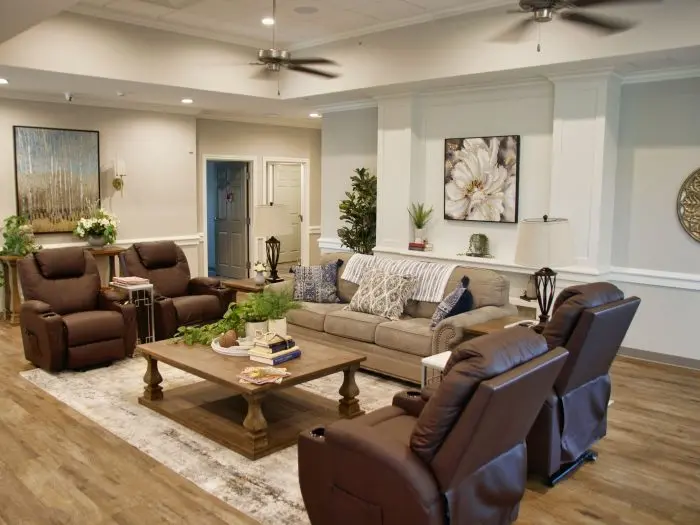
Residential senior care describes a care model, not a legal category. It means long-term care that happens inside a house on an ordinary street, where a small group of older adults live together and a care team works around them. There is a kitchen, a living room, and bedrooms. Care comes to that setting rather than to a purpose-built building.
How does Kansas define residential senior care?
Kansas does not license anything called residential senior care. What the state licenses is an adult care home, and state law sorts adult care homes into categories. Under K.S.A. 39-923, those categories include the nursing facility, the assisted living facility, the residential health care facility, Home Plus, the boarding care home, and adult day care.1
For many Wichita families exploring residential senior care, Home Plus is the license category they encounter most often. State law defines it as a residence caring for not more than 12 individuals who are not related to the owner or operator, and who, because of functional impairment, need personal care and may need supervised nursing care.1
Understanding the license behind the home is important. Many communities describe themselves as home-like, but the license helps explain what services can be provided and how the home is regulated. Only a license tells you what the state has authorized and what the state inspects. When you call a home, ask which category appears on its license.
How do residential care homes support older adults day to day?
Kansas law defines activities of daily living as eating, nutrition, dressing, personal hygiene, mobility, and toileting. Personal care means help with those activities. Supervised nursing care means services given by or under the guidance of a licensed nurse, including medications ordered by a physician.1
In practice, a residential care home covers meals, housekeeping, laundry, medication support, help with bathing and dressing, and supervision through the night. Before anyone moves in, Kansas requires a functional capacity screening. The results of that screening become the basis for a written negotiated service agreement, which lists the services the home has agreed to provide.2
Who tends to benefit most from residential senior care?
Residential senior care often fits an older adult who needs steady daily help but not round-the-clock skilled nursing. It can suit someone who has grown withdrawn at home, someone who feels more comfortable and confident in a smaller, more predictable environment, or someone in the early to middle stages of dementia who does better with fewer people and fewer corridors.
Residential senior care can be a wonderful fit for some older adults, but every person’s needs, preferences, and goals are different. Understanding that early can help families focus on finding the setting that feels right for their loved one. For example, an older adult who wants a private apartment with a kitchen, a full activity calendar, therapy in the building, or a wide circle of peers will usually be happier in a larger community. Neither option is inherently better. The goal is to find the one that best fits your loved one’s needs, preferences, and personality.
How is residential senior care different from traditional assisted living?
Many conversations about residential care and assisted living eventually come back to the same question: which setting is the better fit for the person who will be living there? When families compare residential care and assisted living, they are often trying to understand the differences in environment, services, and daily life. Those differences matter, but the most helpful place to start is with how Kansas defines and regulates each type of care setting.
Does community size change the level of care allowed?
Less than families expect. Kansas defines a Home Plus as a residence caring for no more than 12 residents. It defines an assisted living facility as a place caring for six or more residents that includes apartments and provides or coordinates personal care or supervised nursing care available 24 hours a day.1
When you look at those definitions side by side, a clearer picture begins to emerge. Both are built around residents who need personal care and may need supervised nursing care. Neither is a nursing facility. The distinguishing legal feature of Kansas assisted living is not a higher care ceiling. It is the apartment. State law defines an apartment as a private unit with a bathing room, a kitchen, sleeping, living and storage space, and a door that locks.1
So a smaller home usually does not mean a smaller scope of care. It usually means a private bedroom and bath instead of a private apartment. If you’re comparing residential care and assisted living options, it’s always worth asking which license category the community operates under.
How do caregiver relationships differ in a smaller home?
With fewer residents, the same few caregivers see the same person every shift and have more time to spend with each resident. They learn the small details that make someone who they are, from how they like their morning routine to the subtle changes that signal when they may need extra support. Some families appreciate that smaller settings may make it easier for caregivers to become familiar with residents’ routines and preferences.
One detail families often overlook is staffing. Kansas law states that any Home Plus caring for more than eight residents must adjust caregiver numbers and resources as needed to meet residents’ needs.1 The statute itself acknowledges that a resident count is only part of the picture. The level of support available depends on staffing, resident needs, and how the home is operated. Staffing levels and caregiver coverage are important factors to consider alongside resident count. Resident count is worth knowing, but staffing often tells families much more about the support available day to day. Ask how many caregivers are awake overnight and what staffing looks like on a typical weekend.
What does daily living support look like in each setting?
In a larger community, support is organized around a schedule and call systems, with care teams serving residents throughout the building. In a residential care home, meals are prepared in the shared kitchen, and support is often provided where residents are most comfortable, rather than requiring them to navigate a larger community for assistance.
One difference families should understand is how nursing and therapy services are typically provided. Larger communities often keep a licensed nurse on site for more hours and may have therapy services in the building. Smaller homes more often coordinate nursing and therapy through outside providers. Ask each community how nursing coverage actually works, hour by hour.
How does the environment itself affect daily life?
Distance matters more than families expect. A bedroom fifteen steps from the kitchen removes a hallway, an elevator, and a decision from every trip. For someone with dementia or unsteady balance, removing those extra challenges can make it easier to stay engaged in daily life and participate in the things that bring comfort and connection.
The other side of a small home is a small social circle. Some families value the familiarity that comes from seeing the same people every day, while others prefer the wider range of activities and relationships available in a larger community.
Residential senior care and traditional assisted living in Kansas, side by side
What families compare | Residential senior care (Home Plus) | Traditional assisted living |
Kansas license category | Home Plus adult care home | Assisted living facility |
Licensed capacity | Not more than 12 residents | Six or more residents |
Private living space | Private bedroom, usually with a private bath | An apartment, including a kitchen and a door that locks |
Scope of care in state law | Personal care and, when needed, supervised nursing care | Personal care and, when needed, supervised nursing care |
Setting | A house in a residential neighborhood | A purpose-built community building |
On-site nursing hours | Often on call or coordinated with outside providers; varies by home | Often more nursing hours on site; varies by community |
Amenities and programming | Fewer on-site amenities and a smaller activity calendar | Broader amenities, on-site therapy, and more programming |
Social circle | Smaller and more consistent | Larger and more varied |
State oversight | Licensed and inspected by KDADS | Licensed and inspected by KDADS |
Both residential care homes and larger assisted living communities have strengths. Understanding those differences can help families choose the option that best fits their loved one’s needs and preferences.
What is Home Plus, and why does the term exist only in Kansas?
The term Home Plus is specific to Kansas, which is why many families moving from other states have never encountered it before. Other states use terms like board and care home, residential care home, or adult family home. Kansas wrote its own category into the Adult Care Home Licensure Act, which is why families moving here have usually never heard the phrase. If you are comparing Home Plus senior care against options you researched elsewhere, you are not comparing the same labels.
How does Kansas license and inspect a Home Plus?
The Kansas Department for Aging and Disability Services licenses and inspects adult care homes through its Survey, Certification and Credentialing Commission. Field surveyors conduct unannounced inspections on a rotating basis, plus additional unannounced inspections in response to complaints.3 Day-to-day responsibility belongs to either a licensed adult care home administrator or a state-registered Operator, a credential that exists specifically for smaller settings and carries its own training requirements.4
One requirement families may find especially helpful to understand involves dementia care training. Kansas law requires personnel of any Home Plus who provide services to residents living with dementia to complete dementia care training every year.1 If a home will be caring for your mother’s memory loss, you are entitled to ask when the care team last completed that training.
Why do some families prefer smaller care homes?
The National Institute on Aging groups these small private residences with board and care homes and notes that a caregiver is on site at all times.5 For many families the appeal is simple: fewer transitions, fewer new faces, and a setting their parent still recognizes as a house. There is another benefit families often notice as well. In a home with ten residents, an adult child who visits often becomes part of the household, which matters if you are already carrying the emotional weight of caring for an aging parent.
How can you compare a Home Plus and a large community on paper?
You do not have to take anyone’s word for it. KDADS publishes an Adult Care Home Directory that lists licensed homes with their license category, licensed capacity, administrator or operator, and inspection results.6 Look up every home on your list, including the ones you already like.
Then ask one question almost nobody asks. Since state fiscal year 2025, Kansas has required every assisted living facility, residential health care facility, Home Plus, and boarding care home to report to KDADS after completing any involuntary transfer or discharge of a resident.7 Questions about resident transfers or discharges can provide valuable insight into how a community responds when a resident’s needs change. A provider that is willing to discuss those situations openly and clearly is often helping families understand what to expect over time.
What services are commonly offered in residential senior care homes?
Services vary by home, which is why the written service agreement matters more than the brochure. Most Kansas residential care homes cover the following.
How is help with daily activities provided?
Caregivers help with bathing, dressing, grooming, toileting, and moving safely from room to room. In a small home, that help usually follows the resident’s schedule rather than a shift schedule.
How is medication managed?
Medication support in Kansas falls under supervised nursing care, meaning it is provided by or under the guidance of a licensed nurse. Ask who stores and administers medications, who reviews changes after a hospital stay, and how the home reaches your parent’s physician.
How are meals and nutrition handled?
Meals are cooked in the shared kitchen, where residents can see and smell them being made. For an older adult with a poor appetite, those familiar cues can matter as much as the menu. Ask how the home handles modified textures, diabetic diets, and preferences.
What does social engagement look like day to day?
Connection tends to come from ordinary shared life rather than a printed calendar: coffee at the table, a card game, a visitor who stays for lunch. Ask what a typical Tuesday afternoon looks like, not what the activity list says.
Is memory care available in a residential setting?
Many residential care homes provide memory care services, and Kansas requires annual dementia training for Home Plus personnel who serve those residents. This is one question worth asking directly. The Alzheimer’s Association points out that assisted living is not regulated at the federal level, that its meaning changes from state to state, and that not every provider offers services designed specifically for people living with dementia.8 A dementia-friendly label is not the same as dementia training.
The National Institute on Aging adds that needs change as dementia progresses.9 Ask what the home can and cannot manage today, what it has managed before, and what would prompt a conversation about moving.
What are the real benefits of residential senior care?
Care plans built around the individual
Every family is told their parent will be treated like family. What is verifiable is the negotiated service agreement, developed with the resident and family, listing the services the home has agreed to provide.2 Many families find it helpful to ask for a sample before making a decision.
Caregivers who stay the same
Consistency is the benefit families notice first. When the same caregivers see your father every day, small changes get caught early: a new hesitation on the stairs, less food left on the plate, a different tone in the afternoon.
Room for family to stay involved
Smaller homes can make it easier for families to stay connected and involved in everyday life. You can sit at the table, help with a meal, or visit at an odd hour without navigating a front desk. Ask about visiting policies specifically, because they differ.
How do you know if residential senior care is right for your loved one?
What signs suggest more support may be needed?
For most families, there is rarely one moment that provides a clear answer. Families more often notice a pattern: medications missed or doubled, weight loss, unopened mail, a fall mentioned casually weeks later, a house no longer being kept, or growing isolation. Our guide to signs of decline in seniors covers these in more detail. Notice your own condition too. Caregiver exhaustion is important information about the situation, not a reflection of your dedication or love. It deserves the same consideration as any other factor affecting your loved one’s wellbeing.
How are care needs formally evaluated?
In Kansas, a licensed nurse, a licensed social worker, or the administrator or operator conducts a functional capacity screening before admission to a Home Plus. If the screening indicates a need for health care services, a licensed nurse assesses the resident. Screenings are repeated at least once a year and after any significant change in condition.2 That means the evaluation is a defined process with a paper record, not a sales conversation. Ask who will perform it, when, and whether you can be present.
When should a healthcare provider be involved?
Before deciding on any setting, talk with your parent’s physician about what level of care is appropriate now and what may be needed later. New confusion, sudden falls, weight loss, or a rapid change in behavior should be evaluated medically, because some causes are treatable. A care setting is not a substitute for a diagnosis.
Who pays for residential senior care in Kansas?
Residential senior care in Kansas is largely private pay. Families typically use income, savings, the sale of a home, long-term care insurance, or veterans benefits. What is included in the monthly rate differs by home, so ask for a written schedule of rates and a written refund policy before signing.
One public program may be helpful for families to know about. KDADS states that the Home and Community Based Services Frail Elderly waiver will pay for some, but not all, services delivered in an assisted living facility, residential health care facility, Home Plus, or boarding care home. Room and raw food costs remain the resident’s responsibility.10 Eligibility involves a financial review and a functional assessment, and applications start through the Aging and Disability Resource Center.
Locally, the Central Plains Area Agency on Aging in Wichita can walk a family through local options at no cost, and its counselors are listed with the state.11 The Eldercare Locator is a national starting point if your parent lives elsewhere.12
How do you choose a residential senior care home in Wichita?
How can you verify licensing and safety yourself?
Start with the KDADS Adult Care Home Directory and confirm the license category, licensed capacity, and current administrator or operator. Read the inspection results. A corrected deficiency does not make a home a bad one, and a clean record does not make it a good one, but either way you get specific things to ask about. Keep the Kansas Long-Term Care Ombudsman in your notes too. The ombudsman is a free advocate for residents of licensed long-term care homes and can answer questions about resident rights before and after a move.13
What should you ask about caregiver training and experience?
Ask what training new caregivers complete before their first shift, how dementia training is documented, how long the current team has worked there, and who covers a call-off at 2 a.m. Staff continuity can tell families a great deal about daily life inside a home.
What do resident-to-caregiver ratios tell you?
Resident to caregiver ratios can be helpful, but they rarely tell the whole story. A daytime ratio is not a night ratio, and a weekday ratio is not a weekend ratio. Ask for the ratio at three specific times: mid-morning, dinner, and overnight. Then ask what happens when one person calls in sick.
What should you notice about the environment during a visit?
Visit twice, once scheduled and once unannounced if the home allows it. Notice smell, noise, and whether residents are dressed and engaged. Count the steps from a bedroom to the bathroom and to the kitchen. The National Institute on Aging also recommends reading the contract carefully and asking about anything you do not understand before you sign.14
A Few Things To Look For When You Visit
- Ask what type of license the home operates under. In Kansas “residential senior care” is a general description, while Home Plus is the specific license category. Understanding the license can help you understand the services and oversight provided.
- Learn how many residents the home is licensed to serve. A Home Plus may care for no more than 12 residents, while assisted living communities serve six or more residents and are required to provide apartment-style living accommodations.
- Remember that smaller does not necessarily mean less care. Both Home Plus homes and assisted living communities may provide personal care and supervised nursing care when appropriate.
- Ask about staffing during evenings, overnight hours, and weekends. Kansas requires Home Plus homes caring for more than eight residents to adjust caregiver staffing and resources to meet resident needs.
- If memory support is important, ask about dementia training. Home Plus personnel serving residents with dementia are required to complete dementia training every year.
- Take advantage of public information. License category, licensed capacity, operator information, and inspection results are available through the KDADS Adult Care Home Directory.
Take the next step at your own pace
You do not have to decide anything today. Many families spend weeks or months learning about their options before making a decision. Sometimes the most helpful next step is simply seeing a home in person and asking questions. Comfort and Love Senior Care Homes is a Home Plus community in Wichita, Kansas, with 12 residents per home, private bedrooms with private baths, and caregivers on site around the clock.
Come see our residential assisted living home and bring every question on your list, including the hard ones about overnight coverage, cost, and what happens if needs change. You are welcome to schedule a visit whenever you are ready, or read more about senior care homes in Wichita.
Frequently asked questions about residential senior care
What is residential senior care?
Residential senior care is licensed long-term care provided in a private home rather than a large community. A small number of older adults live together and receive housing, meals, help with daily activities, and supervision. In Kansas, these homes are typically licensed as Home Plus homes.
What is the difference between residential senior care and assisted living in Kansas?
The main legal difference is the license category and the type of living space. A Home Plus serves no more than 12 residents in a house, usually with a private bedroom and private bath. A Kansas assisted living facility serves six or more residents and must include apartments, which state law defines as private units with a kitchen and a door that locks. Both are licensed for personal care and supervised nursing care.
Is residential senior care the same as a Home Plus?
Home Plus is the Kansas license that most residential senior care homes hold. The phrase “residential senior care” describes the model. Home Plus is the legal category defined in K.S.A. 39-923 and licensed by KDADS.
Can people living with dementia live in residential senior care homes?
Many residential senior care homes provide dementia and memory care support, and Kansas requires annual dementia care training for Home Plus personnel who serve those residents. Services still vary by home, so confirm what each one can manage as needs change.
Does residential senior care provide 24-hour support?
Many residential senior care homes provide supervision and assistance around the clock. Coverage levels differ, so ask specifically how many caregivers are awake overnight and on weekends, and how the home handles an unplanned absence.
How many residents typically live in a residential care home?
Kansas limits a Home Plus to no more than 12 residents. Many Wichita homes operate at or near that number. State law also requires a Home Plus caring for more than eight residents to adjust caregiver numbers and resources to meet residents’ needs.
Does Medicaid pay for residential senior care in Kansas?
KanCare may help through the Home and Community Based Services Frail Elderly waiver. KDADS states the program pays for some but not all services delivered in a Home Plus, and that room and raw food costs remain the resident’s responsibility. Eligibility involves a financial review and a functional assessment.
This article is general educational information for families researching senior care options in Wichita, Kansas, and the surrounding Sedgwick County area. It is not medical, legal, or financial advice, and it is not a substitute for professional guidance. Licensing categories, regulations, and program rules can change. For guidance specific to your loved one’s health, finances, or legal situation, please consult a qualified healthcare provider, attorney, or financial professional, and verify current requirements with the Kansas Department for Aging and Disability Services.
Author Bio
Pamela Hamel, RN, serves as Clinical Director for Comfort and Love Senior Care Homes in Wichita, Kansas. She oversees resident care, medication management, dietary support and care planning for older adults living in licensed Home Plus residential assisted living and memory care homes. Pamel works closely with families as they navigate senior care decisions and long-term care options.
Sources
[1] Kansas Office of Revisor of Statutes.
“K.S.A. 39-923, Adult Care Home Licensure Act definitions.”
https://www.ksrevisor.gov/statutes/chapters/ch39/039_009_0023.html.
Accessed September 2026.
[2] Kansas Secretary of State.
“K.A.R. 26-42-201, Resident functional capacity screening (Home Plus).”
Accessed September 2026.
[3] Kansas Department for Aging and Disability Services.
“Survey, Certification and Credentialing Commission.”
https://www.kdads.ks.gov/about-us/about-our-commissions/survey-certification-credentialing.
Accessed September 2026.
[4] Kansas Department for Aging and Disability Services.
“Licensing and Policy.”
https://www.kdads.ks.gov/licensing-policy.
Accessed September 2026.
[5] National Institute on Aging.
“Long-Term Care Facilities: Assisted Living, Nursing Homes, and Other Residential Care.”
Accessed September 2026.
[6] Kansas Department for Aging and Disability Services.
“Adult Care Home Directory.”
https://www.kdads.ks.gov/licensing-policy/adult-care-home-directory.
Accessed September 2026.
[7] Kansas Department for Aging and Disability Services.
“Legislative Policy Updates: involuntary transfer and discharge reporting.”
https://www.kdads.ks.gov/licensing-policy/legislative-policy-updates.
Accessed September 2026.
[8] Alzheimer’s Association.
“Long-Term Care: types of residential care, choosing a care setting, and questions to ask.”
https://www.alz.org/help-support/caregiving/care-options/long-term-care.
Accessed September 2026.
[9] National Institute on Aging.
“Alzheimer’s Caregiving: Finding Long-Term Care.”
https://www.nia.nih.gov/health/alzheimers-caregiving/alzheimers-caregiving-finding-long-term-care.
Accessed September 2026.
[10] Kansas Department for Aging and Disability Services.
“Home and Community Based Services, Frail Elderly (FE) waiver.”
Accessed September 2026.
[11] Kansas Department for Aging and Disability Services.
“SHICK Coordinator and Counselor Directory, listing for Central Plains Area Agency on Aging, Wichita.”
Accessed September 2026.
[12] Eldercare Locator.
“Eldercare Locator.”
Accessed September 2026.
[13] Kansas Long-Term Care Ombudsman.
“Office of the State Long-Term Care Ombudsman.”
Accessed September 2026.
[14] National Institute on Aging.
“How To Choose a Nursing Home or Other Long-Term Care Facility.”
Accessed September 2026.